Our Accreditations
Because of local, federal and organizational fire and safety codes, all types of construction materials and building products require a UL 263 fire-resistance rating before they can be installed or used.
The UL 263 test is one of the most helpful materials tests used by fire and flammability test labs to obtain this rating for structural steelwork.
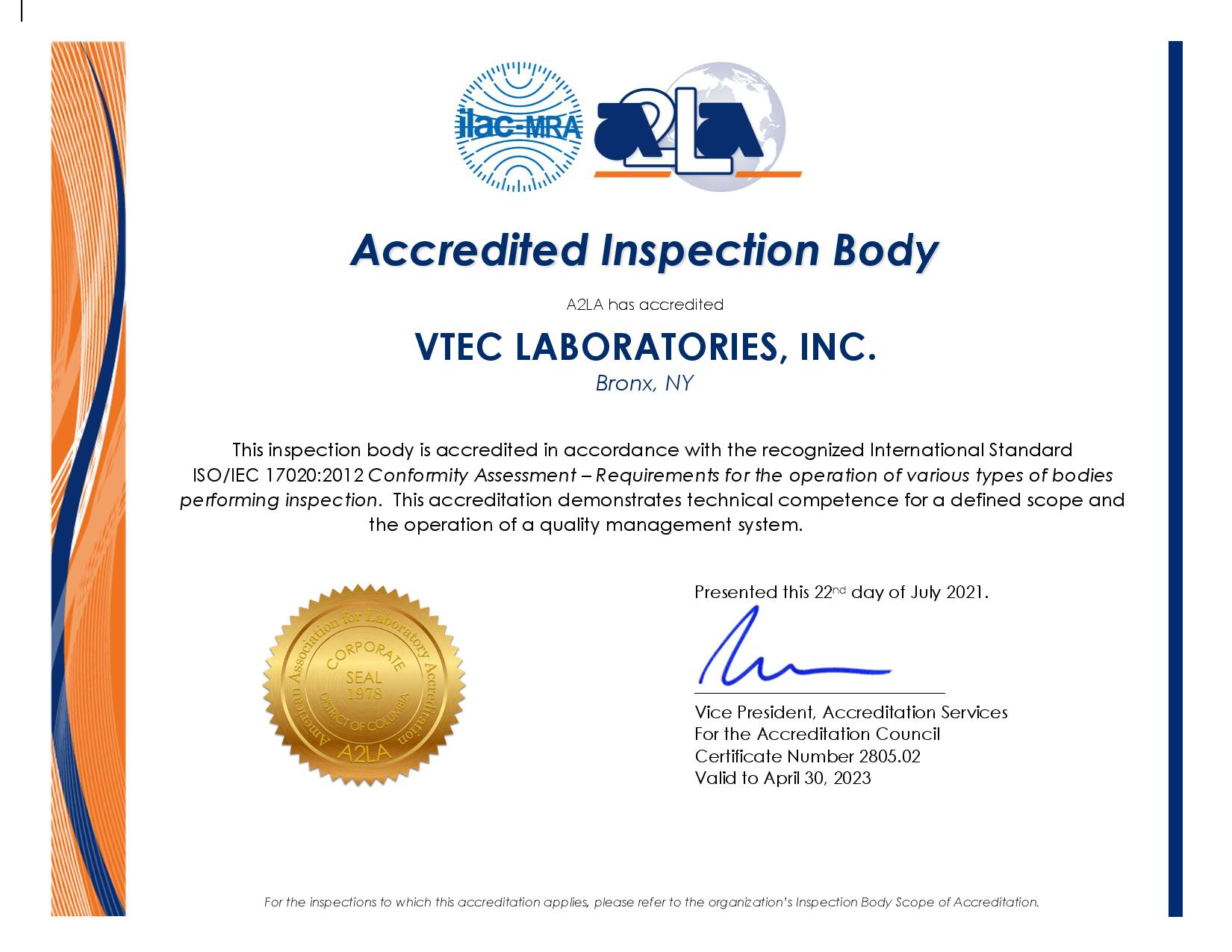
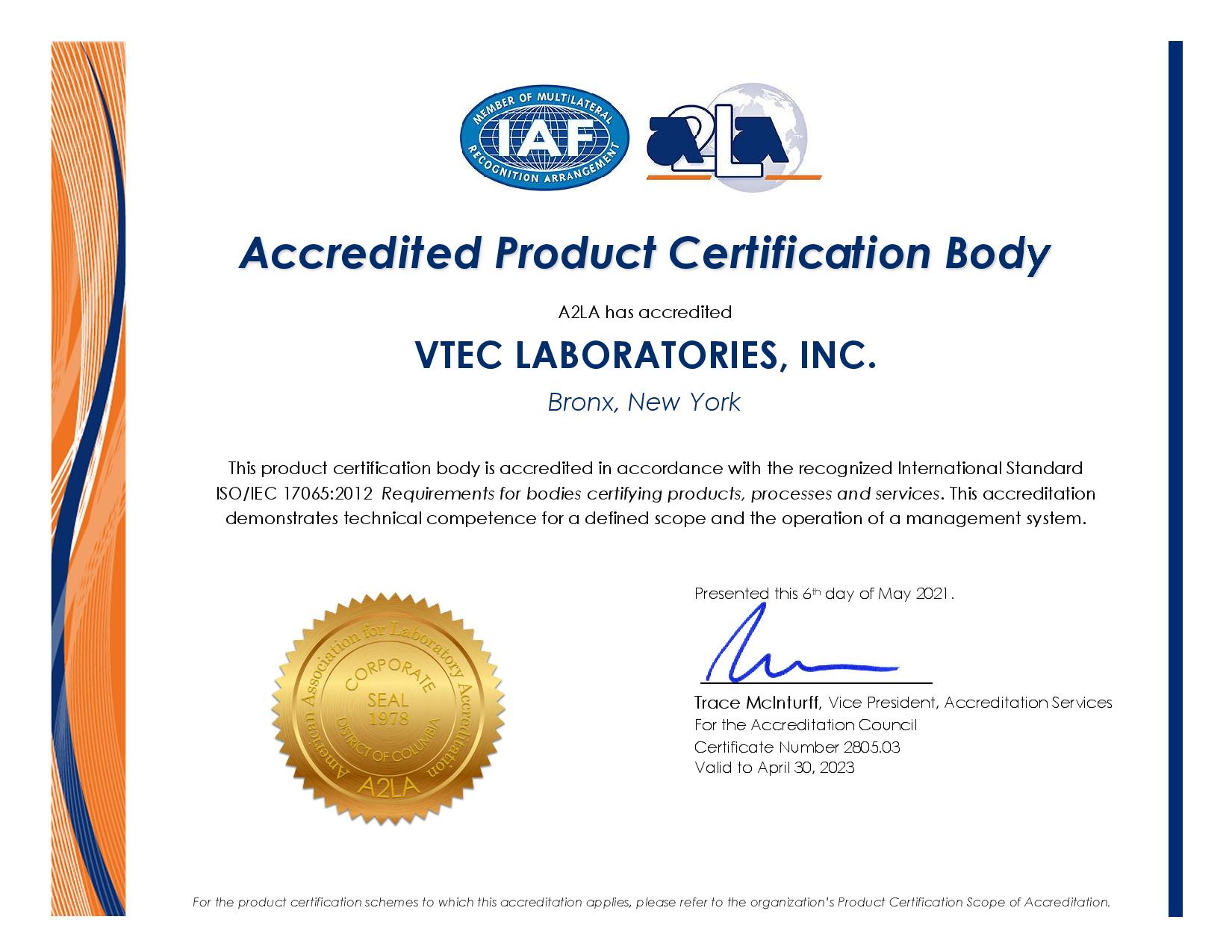
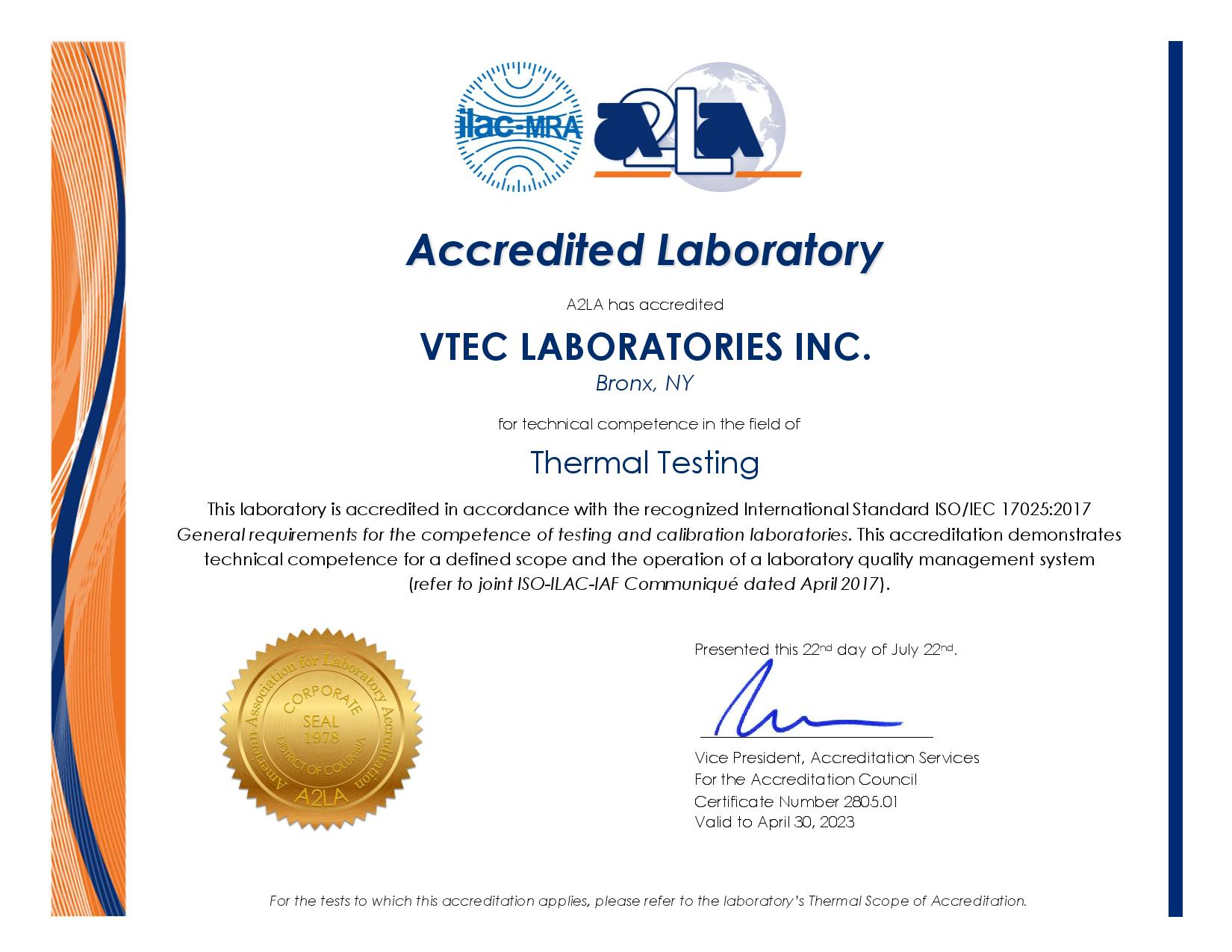
As a fully certified, ISO-accredited laboratory, VTEC Laboratories is exceptionally qualified to conduct UL 263 fire tests of building construction and materials.
Our highly trained staff uses state-of-the-art equipment to evaluate how long your specific test materials can remain intact during a fire event.
What Is the UL 263 Test?
The UL 263 test is the North American Standard for evaluating fire protection in steel structures. It was developed to simulate the types of fires that occur in commercial buildings, such as offices, schools, and hospitals, and follows the same principles found in traditional UL laboratories' fire exposure curves.
This steel fire protection test evaluates a complete assembly's resistance to heat and hose steam in some instances.
These assemblies may include walls, columns, beams, slabs, girders and other structural units that are permanent, integral parts of a finished building. This includes configurations such as a UL 263 wall assembly or a UL 263 floor assembly, depending on the project requirements.

How Do We Conduct the UL 263 Fire Testing Services?
During the UL 263 fire rating process, we install the preconstructed assembly portion in a test furnace. We use a vertical furnace for columns, walls and partitions, and a horizontal furnace for roofs, ceilings and floors.
We ignite a mixture of air and gas and feed it into the furnace during a timed exposure period. Exposure period options include:
- 20 minutes
- 30 minutes
- 45 minutes
- 1 hour
- 1.5 hours
- 3 hours
- 4 hours
The furnace temperature rises in preset increments. After five minutes, the temperature reaches 1,000 degrees Fahrenheit. The temperature gradually increases until it reaches 2,000 degrees Fahrenheit at the 4-hour mark.
For the UL 263 test, the failure points during the exposure period include:
- Flame penetration through the assembly.
- An unacceptable temperature increase on the unexposed side of the assembly.
- Structural failure or collapse of the assembly.
When you choose our UL 263 fire testing services, you will have the option of full-scale testing on a 10-by-10 or 3-by-3 sample.

Your Trusted UL 263 Test Lab
At VTEC Laboratories, we've been leading the way in standardized materials testing — including flammability testing like UL 263 — for over 30 years.
During that time, we've performed countless standardized UL 263 fire rating tests and delivered timely, accurate results. Business owners, manufacturers and architects trust us for fast, reliable testing services.
Reach out to Us Today
From steel fire protection tests to customized on-site testing, VTEC Laboratories provides the services you need to be in full compliance. Get in touch with us today to learn more about our UL 263 testing services.
You can also request a free quote. We'll reach out to you with all the details as soon as possible.
Learn More About VTEC Labs’ UL 263 Fire Testing Services
At VTEC Laboratories, our experience with full-scale and flammability evaluations spans more than three decades.
Because we work with assemblies in construction, manufacturing and government projects, we provide testing services that match each sector’s required fire-resistance standards.
Learn more about our UL 263 services by contacting us online or calling us at (718) 542-8248.
Frequently Asked Questions
Can UL 263 be used for engineering judgments or design comparisons?
It can inform those decisions, but the test itself is strictly performance-based. Most design teams use the results to compare protective coatings or assembly layouts, then request an engineering judgement only when a project condition falls outside the tested configuration.
How large should my UL 263 fire rating test sample be for accurate results?
Most clients select the 10-by-10 configuration because it behaves more like an in-place building assembly. Smaller samples are helpful for early evaluations or simple steel members, but the larger format provides the most reliable data for submittals and approvals.
Will I receive temperature-time data as part of the report?
Yes. The final report includes furnace conditions, thermocouple readings, observations during exposure and any points where structural behaviour changed. This documentation is often required by building departments during plan review.
Can VTEC Labs run UL 263 tests for unique or non-standard assemblies?
We can. If your assembly falls outside the traditional categories, we work with your drawings and fabricate the test section so the results apply to the intended field installation.

VTEC Laboratories Inc.
Since 1982, VTEC Laboratories has provided fast, reliable testing services across aerospace, construction, and manufacturing. Based in New York, we offer ISO-accredited fire, weathering, industrial, and environmental testing delivered with speed, accuracy, and clear communication.
212 Manida Street, Bronx, NY 10474
Phone: 718-542-8248
Fax: 718-542-8759