ASTM D412 Rubber Tensile Testing
Rubbers and thermoplastics are essential materials in a diverse range of industrial applications. ASTM D412 testing is one of the most helpful materials tests for determining whether these materials can withstand the stretching forces they may be subject to in your application.
VTEC Laboratories provides ASTM D412 rubber tensile test services for manufacturers, engineers, and product teams that need tensile strength, elongation, and stress-strain data for rubber, elastomers, and thermoplastic elastomers.
What Is the ASTM D412 Test?
The ASTM D412 test evaluates the tensile properties of rubber and thermoplastic materials. It measures a material's elasticity under tensile strain using a universal testing machine.
ASTM D412 testing is commonly used when buyers need to evaluate how rubber or elastomer materials behave under pulling, stretching, or elongation. The results can support product development, supplier qualification, material comparison, quality control, and failure investigation.
ASTM D412 tests for numerous tensile properties, including:
- Tensile stress: The amount of stress required to stretch the sample at a given elongation.
- Tensile strength: The maximum tensile stress applied to a sample before it ruptures.
- Tensile set: The extent to which a material is deformed after being stretched for a short period. It is expressed as a percentage of the material's original length.
- Elongation: The amount a specimen stretches before rupture, typically reported as a percentage.
Elastomer Materials Commonly Tested
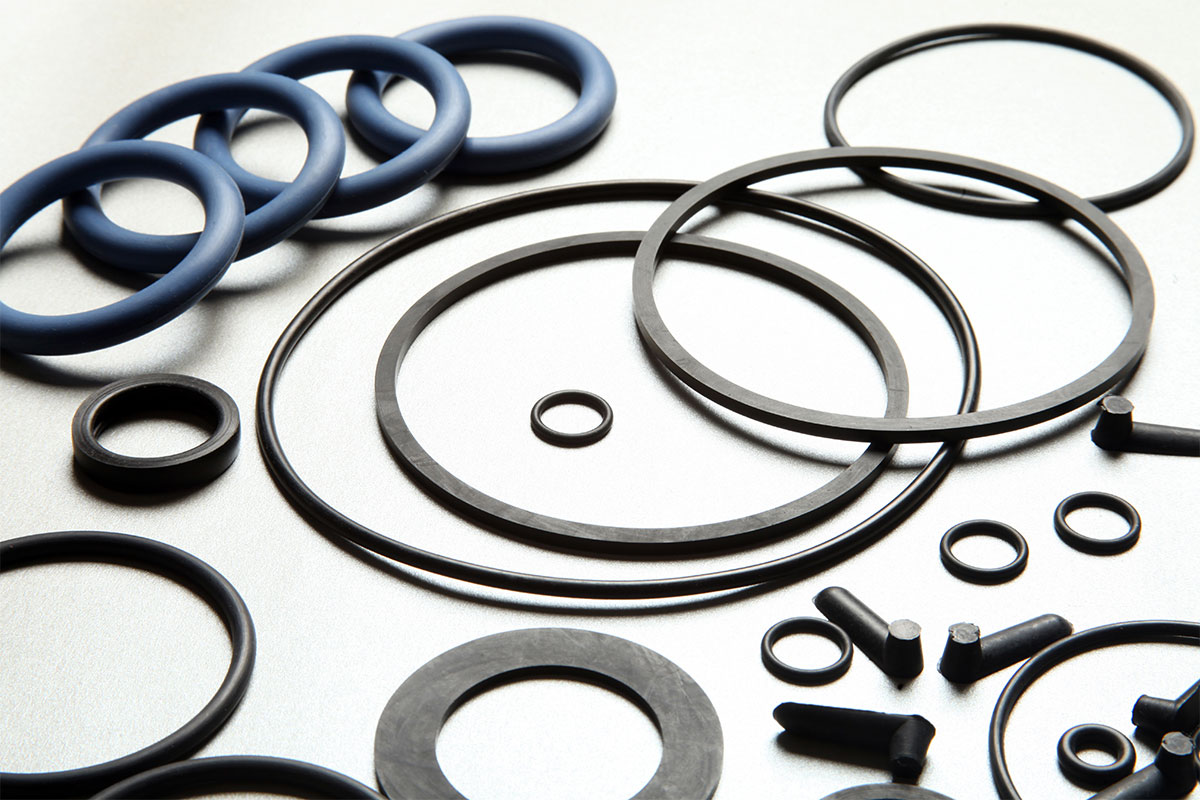
VTEC Laboratories performs ASTM D412 testing on rubber and elastomeric materials used in demanding commercial and industrial applications. These materials often need to stretch, recover, and maintain performance under repeated loading.
Common materials and products tested include:
- Vulcanized rubber
- Thermoplastic elastomers
- Seals and gaskets
- O-rings
- Hoses and belts
- Rubber sheets and molded rubber parts
- Flexible elastomeric components
For broader material evaluation, VTEC Laboratories also provides materials testing and physical testing services.
ASTM D412 Specimen Preparation
One of the biggest reasons for inconsistent ASTM D412 test results is improper sample preparation. At VTEC Labs, we have an extensive selection of sample die cutters to help cut samples precisely and uniformly.
Specimen preparation can affect tensile strength, elongation, and the repeatability of the final data. Important preparation factors may include specimen shape, thickness, cutting quality, conditioning, and whether the material has visible surface defects.
VTEC Laboratories offers sample cutters for straight, dumbbell, dog bone, and ring-cut samples outlined in the standard.
Dumbbell Specimen Geometry Explained
Dumbbell specimens are commonly used because they help concentrate tensile stress in the narrow center section of the specimen. This allows the ASTM D412 rubber tensile test to evaluate how the material stretches and ruptures under controlled loading.
The correct ASTM D412 fixture, grip setup, and specimen geometry help reduce slippage and uneven loading. If you are not sure which specimen format is appropriate, VTEC Laboratories can review your material type, sample form, and testing objective before the project begins.
How VTEC Labs Performs the ASTM D412 Test
VTEC Laboratories performs the ASTM D412 test using one of two methods, depending on your sample shape.
Test Method A is used for straight and dumbbell (or dog-bone-shaped) samples. It is the most common test for rubbers and elastomers.
Test Method B is a less common test used for cut ring samples.
VTEC Laboratories uses a universal testing machine to perform both test methods. The sample is placed in specialized grips and fixtures, then stretched under controlled conditions so tensile behavior can be measured.
The ASTM D412 test method may include measuring force, elongation, rupture behavior, and tensile set depending on the selected method and project requirements. This helps generate data on the tensile properties of vulcanized rubber and thermoplastic elastomers.
How ASTM D412 Results Are Reported
An ASTM D412 testing report may include tensile strength, tensile stress, elongation, tensile set, specimen behavior, and other relevant observations from the test. These results help buyers understand how a rubber compound performs under tensile load.
Clients often use data on the tensile properties of rubber for:
- Product development
- Quality control
- Supplier qualification
- Material comparison
- Failure investigation
- Customer or specification documentation
Tensile Strength vs. Elongation in Rubber Materials
ASTM D412 testing data shows how much tensile stress a material can withstand before rupture. Elongation data shows how far the material can stretch before it breaks.
Both values matter because rubber performance is not defined by strength alone. A material may have high tensile strength but limited flexibility, or it may stretch significantly but lack the strength required for the application.
Related Rubber Testing Standards
Some projects may require related testing in addition to ASTM D412 testing. ISO 37 is another standard used for rubber tensile testing, while ASTM D624 is commonly used for tear strength testing.
VTEC Laboratories can also help determine whether related material property tests, such as ASTM D638 tensile testing or ASTM D790 flexural testing, may be useful for a broader evaluation.
Industries Using ASTM D412 Testing
ASTM D412 testing is used across industries where rubber, elastomers, and flexible polymer materials need to meet defined performance expectations.
- Automotive: Seals, gaskets, hoses, belts, and molded rubber components.
- Aerospace: Elastomeric components requiring tensile and elongation data.
- Construction: Rubberized materials, sealants, membranes, and flexible building products.
- Industrial manufacturing: Rubber parts used in equipment, machinery, and production environments.
- Consumer products: Flexible components that must stretch, recover, or resist rupture during use.
Why Choose VTEC Laboratories for ASTM D412 Test Services?
VTEC Laboratories has provided elastomer tensile strength tests for over 30 years as an ISO-accredited facility with advanced equipment and experienced laboratory personnel.
VTEC Labs helps clients prepare for ASTM D412 testing by reviewing sample details, test objectives, and reporting needs before the project begins. This helps reduce confusion and supports clearer, more useful test results.
Your report will include the applicable test results and relevant observations, giving you data to support material selection, comparison, quality control, or design review.
How to Request ASTM D412 Testing
To request ASTM D412 testing, contact VTEC Laboratories with as much project information as possible. Useful details include:
- Material type or rubber compound
- Available sample form
- Sample quantity
- Required standard, drawing, or customer specification
- Whether Method A or Method B is required, if known
- Whether results are needed for R&D, quality control, supplier qualification, or failure analysis
- Any conditioning, environmental exposure, or documentation requirements
If you are unsure which specimen format or testing data you need, VTEC Laboratories can review your project details and help identify the appropriate testing path.
Get in Touch With VTEC Labs for Tensile Testing of Elastomers
Contact VTEC Laboratories today to learn more about ASTM D412 test services. For specific information about your testing needs, request a free quote online. VTEC Laboratories will follow up with the details needed to proceed with your testing.
Learn More About Expert Materials Testing
At VTEC Laboratories, our role as a multi-functional company stems from our more than three decades of experience. Due to our extensive expertise in multiple industries, we provide comprehensive services that meet each field’s unique standards, needs and objectives.
Learn more about our services by contacting us online or calling us at (718) 542-8248.

VTEC Laboratories Inc.
Since 1982, VTEC Laboratories has provided fast, reliable testing services across aerospace, construction, and manufacturing. Based in New York, we offer ISO-accredited fire, weathering, industrial, and environmental testing delivered with speed, accuracy, and clear communication.
212 Manida Street, Bronx, NY 10474
Phone: 718-542-8248
Fax: 718-542-8759